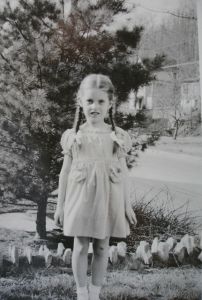
How Your Ancestors Affect Your Emotions
Can ancestors affect your emotions? As much as we may not want to admit it certain things run in families.
We all know families who have a history of heart disease or other health issues. Other families might have numerous members who share a profession.
Did you know that you can inherit emotions, beliefs, and even phobias? Do you have emotional problems that doesn’t seem to fit your past? Are there emotional issues that run in your family?
Read on to find out more.
How you inherit your emotions and beliefs
I have two theories that explain how you can inherit an emotion. You can learn an emotion by modeling a parent or grandparent.
When you learn by modeling, you (consciously or unconsciously) adopt another person’s posture, movements, thoughts, and emotions. In my NLP training, we were taught how to match another person by standing and moving like them. When we matched or mirrored someone, we had surprising insights into their emotions and moods. Sometimes the trainers had to remind us not to get stuck in someone else’s emotions.
The other theory involves morphic fields. Biologist Rupert Sheldrake proposes an unseen field that helps an organism know how to develop. Through morphic resonance, “We inherit bodily, emotional, mental, and cultural habits, including the habits of our language” (Rupert Sheldrake).
With this theory, you can inherit emotions and beliefs from long dead ancestors.
An example from a client
When I help a client release unwanted emotions using the poetry of emotion process, I ask my client to go back to a time before he ever felt the unwanted emotion. Sometimes a client tells me that there has never been a time before the emotion. I always believe them.
The next question I ask is, “Is this emotion from an ancestor?”
One of my clients was struggling to create a long term relationship. He wanted to marry and have children, but he had trust issues. When I asked if there was ever a time when he felt trusting, he told me “no”. I then asked if a lack of trust came from an ancestor. He immediately knew the source.
His grandfather abandoned his grandmother and she struggled to raise her children alone. She never trusted a man again. He commented that everyone in his family had trust issues.
Using the poetry of emotion process, he was able to release this limiting belief and reclaim a belief that matched his life experiences and goals.
Another example
I worked with a woman who believed she was always right, no matter what. This caused her problems in all her relationships and even at work.
Many members of her family also believed they were always right. I sometimes wondered what their family reunions were like.
We discovered the story of a long dead ancestor. We did not know if the story was true or not, but we were able to use the power of a story to heal an emotional wound.
The ancestor was unable to convince his village of an impending disaster and many people were killed. My client said, “That’s exactly how I feel. If people don’t believe me then something bad will happen.” She had this belief even though she had not experienced a disaster.
When she released this belief, she felt a deep sense of relief.
Are your ancestors affecting you?
If you have unexplained fears or phobias or problems that run in your family, you may have inherited these problems.
You can use the basic poetry of emotion process described in “Are you new to the site?” or you can learn a special technique. I will be writing about this technique in future posts. To be sure you don’t miss out, sign up for my newsletter.
(Image: Lost in Scotland @ Flickr)



Very interesting Donna. I was unaware of the POE process, but it certainly makes sense!
Thanks Terri. We can talk more next time we get together.